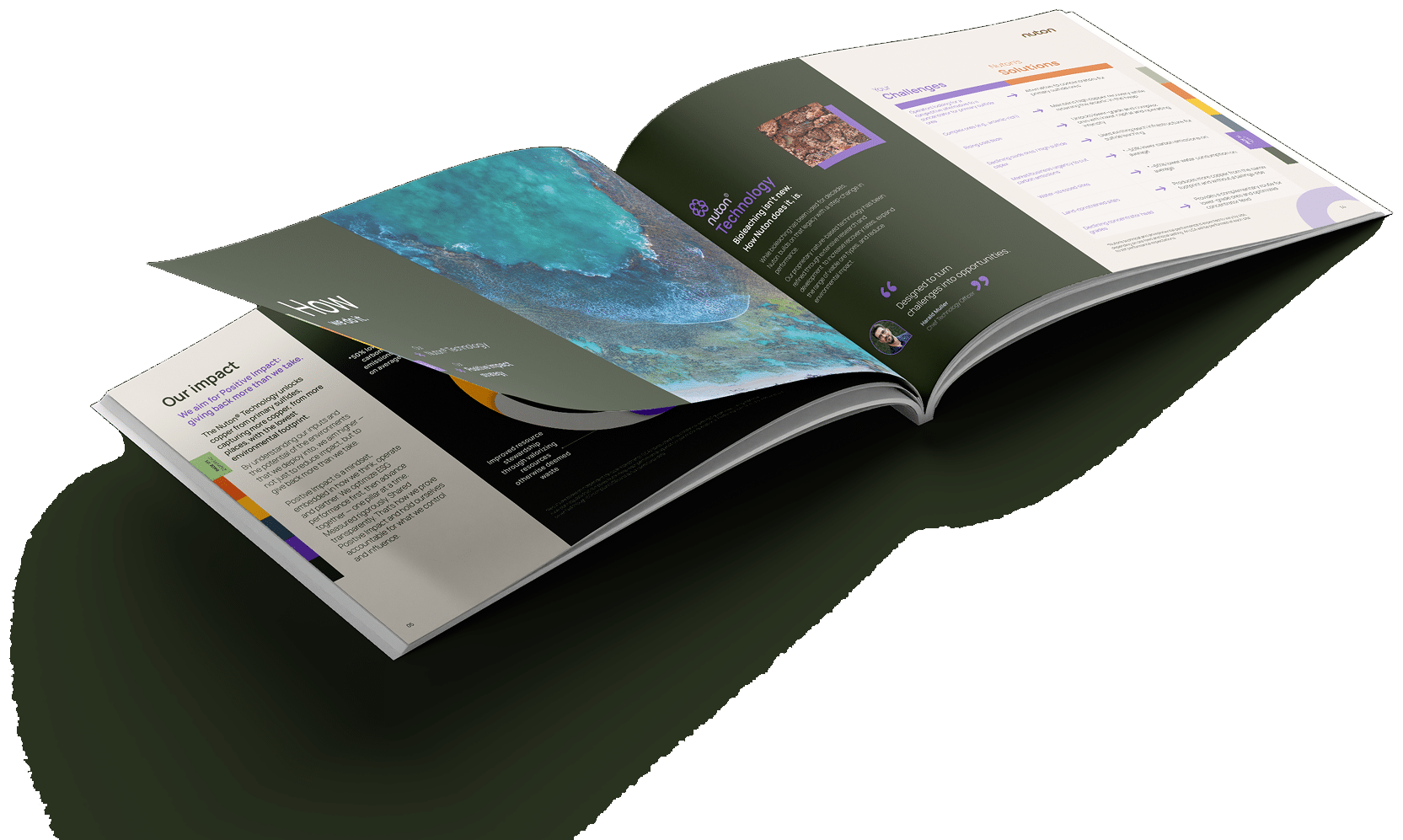
Nuton is revolutionizing copper production. The 2026 “Copper, by Nuton” report reveals an exclusive look at the technical benchmarks and strategic milestones that are setting a new standard for copper production. Access the report to learn how we are leveraging a pioneering technology, a new commercial model and aspirations to produce copper with the lowest environmental footprint in the market.

Nuton plays two key roles: technology provider and investment partner
“Copper, by Nuton” reveals how solid innovation can lead to real-world results. As a technology provider and investment partner, Nuton works collaboratively with mine sites to unlock more copper, faster, with a lower environmental footprint.
The full report highlights the pivotal transition as Nuton evolves from research to industrial-scale operations. At Gunnison Copper Corp.´s Johnson Camp Mine in Arizona, we successfully demonstrated the power of the Nuton® Technology with a 75x scale-up. Today Nuton is engaged in 8 active partnerships across 4 countries with Nuton team members working to launch our award-winning mining venture.
The Nuton difference: bioleaching for more copper and less impact
How exactly does our proprietary bioleaching technology work? How does it leverage the power of naturally occurring bacteria to unlock critical resources? “Copper, by Nuton” details how Nuton has the potential to recover up to 85% of copper from complex ores while significantly reducing water and energy consumption.
Nuton is not a single-ingredient solution. We are a systems integrator. We bring every component together, optimizing our technology for the ore, the site and the partner, to deliver value from ore to impact.
Access the full “Copper, by Nuton” report
Get a behind-the-scenes reveal at our Positive Impact aspirations, operational roadmap, proof-of-concept data and “Positive Impact” pillars. Learn more about how Nuton is turning previously inaccessible materials into the building blocks of a more sustainable economy.
Nuton, a Rio Tinto venture, is redefining what’s possible in sustainable mining. Over the next three years, Nuton has committed to purchasing 134,000 Green-e Energy-certified Renewable Energy Certificates (RECs) generated from US renewables. By combining proprietary bioleaching technology and investment in renewable energy, Nuton is positioning Gunnison Copper Corp.’s Johnson Camp Mine (JCM) to be the lowest-carbon copper producer in the U.S.
“Nuton’s investment further strengthens our ambition to produce the lowest-carbon copper while bringing copper to market faster and more efficiently,” says Nuton Interim Chief Executive Officer Cecilia Perla.
Nuton commits to Renewable Energy Certificates investment
Central to Nuton’s mission is its Positive Impact commitment. This achievement isn’t just a milestone; it is a blueprint for the future of industry – proving that copper production can be smarter, cleaner, and more efficient.
The purchase of these RECs generated from US renewables over the next three years further proves this pledge. These RECs:
- Corresponds to one megawatt-hour of renewable electricity delivered to the grid
- Ensure that 100% of JCM’s electricity consumption is matched by renewable generation
- Mitigate Scope 2 emissions
- Help produce low-carbon intensity copper
A Renewable Energy Certificate is a market-based instrument that represents the legal property right to the renewable attributes of electricity generation. For every megawatt-hour of clean energy produced and sent to the power grid, one REC is created, allowing Nuton to formally track and claim the environmental benefits of its energy use.
“For every megawatt-hour of clean energy produced and sent to the power grid, one REC is created…”

Life Cycle Assessment confirms lower carbon footprint
Nuton’s technology is delivering a high-quality product with a significantly reduced environmental footprint, and the results of this integrated approach are industry-leading. A recent ISO-certified Life Cycle Assessment (LCA) confirms that copper produced at Johnson Camp Mine – supported by Nuton technology and RECs investment – is expected to result in a carbon footprint of just 0.82kg CO2-e per kilogram of copper, measured by a “mine-to-refined metal” basis.
To put this in perspective:
- JCM Carbon Footprint: 0.82 kg CO2-e / kg Cu
- Projected 2026 Global Average: 3.4 kg CO2-e / kg Cu1
The LCA also estimates that JCM has a direct water consumption of 71 liters per kilogram of copper, a fraction of the 130 liters per kilogram of copper consumed at the typical copper mine.2
Ultimately, Nuton is proving that through biology, digital innovation, and renewable energy, the transition to a low-carbon economy can be powered by copper that is as responsible as it is essential.
- Skarn Associates Copper Mine GHG and Energy Intensity Curve Generator, November 2025 dataset for the year 2026. The E1 metric includes all GHG emissions from mine to refined metal.
- Water and carbon emissions intensities for Johnson Camp and global averages have been validated by Skarn Associates, a leading provider of carbon and water intensity curves for the industry.
Rio Tinto today announces a strategic collaboration with Amazon Web Services (AWS) that will see AWS become Nuton® Technology’s first customer following the breakthrough industrial-scale deployment of the innovative bioleaching technology at the Johnson Camp copper mine in the U.S. last month.
Under the two-year agreement, AWS will use the first Nuton copper ever produced in components of its U.S. data centres, while also providing cloud-based data and analytics support to accelerate the optimisation of Nuton’s proprietary bioleaching technology at Gunnison Copper’s Johnson Camp mine. Data centres use copper in a wide variety of applications, including electrical cables and busbars, windings in transformers and motors, printed circuit boards, and heat sinks on processors.
Nuton is also utilising AWS platforms to simulate heap-leach performance and feed advanced analytics into Nuton’s decision systems, allowing for optimised acid and water use while improving predictions for copper recovery. It’s modular bioleaching system works by extracting copper from primary sulphide ores using naturally occurring microorganisms. This approach, combined with digital tools, enables rapid scaling and tailoring of the technology to different ore bodies, reducing the pathway from concept to production.
The process produces 99.99% pure copper cathode at the mine gate and removes the need for traditional concentrators, smelters and refineries, significantly shortening the mine-to-market supply chain. Nuton is projected to use substantially less water and have lower carbon emissions compared with conventional concentrator processing routes, while also recovering value from ore previously classified as waste.
Rio Tinto Copper Chief Executive Katie Jackson said:“This collaboration is a powerful example of how industrial innovation and cloud technology can combine to deliver cleaner, lower-carbon materials at scale. Nuton has already proven its ability to rapidly move from idea to industrial production, and AWS’s data and analytics expertise will help us to accelerate optimisation and verification across operations.
“Importantly, by bringing Nuton copper into AWS’s U.S. data-centre supply chain, we’re helping to strengthen domestic resilience and secure the critical materials those facilities need, closer to where they’re used. Together we can supply the copper critical to modern data infrastructure while demonstrating how mining can contribute to more sustainable supply chains.”
Amazon’s Chief Sustainability Officer Kara Hurst said: “Amazon’s Climate Pledge goal to reach net zero carbon by 2040 requires us to innovate across every part of our operations, including how we source the materials that power our infrastructure.
“This collaboration with Nuton Technology represents exactly the kind of breakthrough we need—a fundamentally different approach to copper production that helps reduce carbon emissions and water use. As we continue to invest in next-generation carbon-free energy technology and expand our data centre operations, securing access to lower-carbon materials produced close to home strengthens both our supply chain resilience and our ability to decarbonize at scale.”
Gunnison Copper’s Johnson Camp mine in Arizona is now the lowest-carbon primary copper producer in the U.S. on the mine to refined metal basis widely used by industry. Recent third-party life cycle assessment (LCA) has confirmed Johnson Camp’s Nuton copper is expected to have a full scope carbon footprint (Scope 1+2+3) of just 2.82 kgCO₂e/kg Cu. The full-scope carbon footprint of primary copper varies by production method and technology but ranges from approximately 1.5 to 8.0 kgCO₂e/kg Cu globally.
Through the purchase of 134,000 Green-e Energy certified renewable energy certificates, Nuton ensures 100% of the site’s electricity is matched by on-site electricity consumption. Additionally, water intensity is anticipated to be 71 litres per kilogram copper, compared to the global average industry estimate of ~130 litres per kilogram of copper production[1].
The project is targeting production of approximately 30,000[2] tonnes of refined copper across a four-year deployment period.
Contacts
Please direct all enquiries to media.enquiries@riotinto.com
| Media Relations, United Kingdom Matthew Klar M +44 7796 630 637 David Outhwaite M +44 7787 597 493 | Media Relations, Australia Matt Chambers M +61 433 525 739 Alyesha Anderson M +61 434 868 118 Rachel Pupazzoni M +61 438 875 469 Bruce Tobin M +61 419 103 454 | Media Relations, Canada Simon Letendre M +1 514 796 4973 Malika Cherry M +1 418 592 7293 Vanessa Damha M +1 514 715 2152 |
| Investor Relations, United Kingdom Rachel Arellano M: +44 7584 609 644 David Ovington M +44 7920 010 978 Laura Brooks M +44 7826 942 797 Weiwei Hu M +44 7825 907 230 | Investor Relations, Australia Tom Gallop M +61 439 353 948 Eddie Gan-Och M +976 95 091 237 | Media Relations, US & Latin America Jesse Riseborough M +1 202 394 9480 |
| Rio Tinto plc 6 St James’s Square London SW1Y 4AD United Kingdom T +44 20 7781 2000 Registered in England No. 719885 | Rio Tinto Limited Level 43, 120 Collins Street Melbourne 3000 Australia T +61 3 9283 3333 Registered in Australia ABN 96 004 458 404 |
[1] Water and carbon emissions intensities for Johnson Camp and global averages have been validated by Skarn Associates, a leading provider of carbon and water intensity curves for the industry.
[2] Includes ~16kt from run of mine leaching pad and ~14kt from Nuton technology.
Rio Tinto has successfully produced the first copper from the Johnson Camp mine in Arizona using its Nuton® Technology, marking a pivotal step forward in the development of this innovative copper processing technology.
After more than 30 years of research and development, the first copper cathode using Rio Tinto’s proprietary bioleaching technology, which relies on microorganisms grown on site, was produced at Gunnison Copper’s Johnson Camp mine last month. The deployment involves the design and delivery of a technology package for a heap leach pad targeting production of approximately 30,000 tonnes of refined copper over a four-year demonstration period. Rio Tinto is engaging with several potential customers in the U.S. to support the domestic copper supply chain.
Rio Tinto Copper Chief Executive Katie Jackson said, “This is a breakthrough achievement for our Nuton technology, which is proving that cleaner, faster, and more efficient copper production is possible at an industrial scale. In an industry where projects typically take about 18 years to move from concept to production, Nuton has now proven its ability to do this in just 18 months.
“Nuton has designed a modular system deployed as a technology package integrating biology, chemistry, engineering, and digital tools, allowing it to be rapidly scaled and tailored to different ore bodies, unlocking resources that have historically been considered uneconomic or challenging. We are actively partnering on projects in North and South America to assess the potential for future deployment at additional sites in the coming years.”
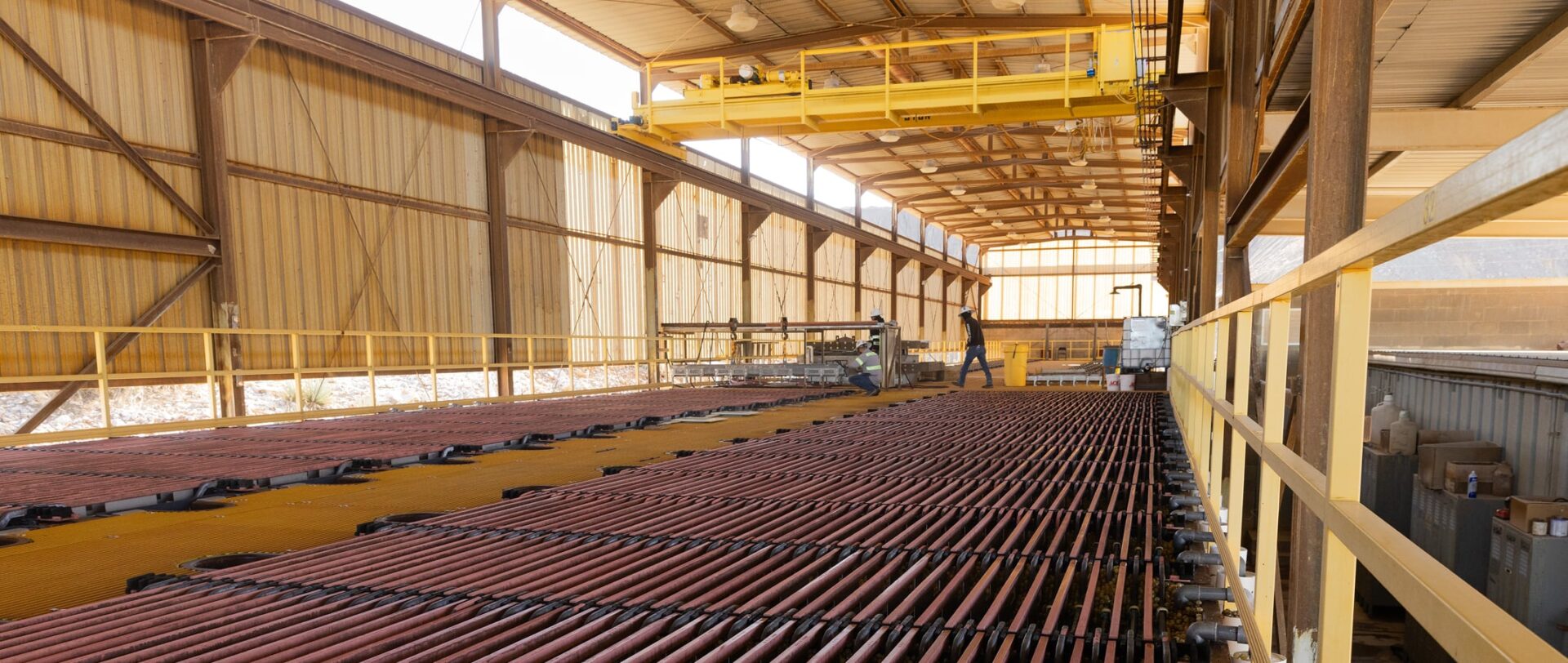
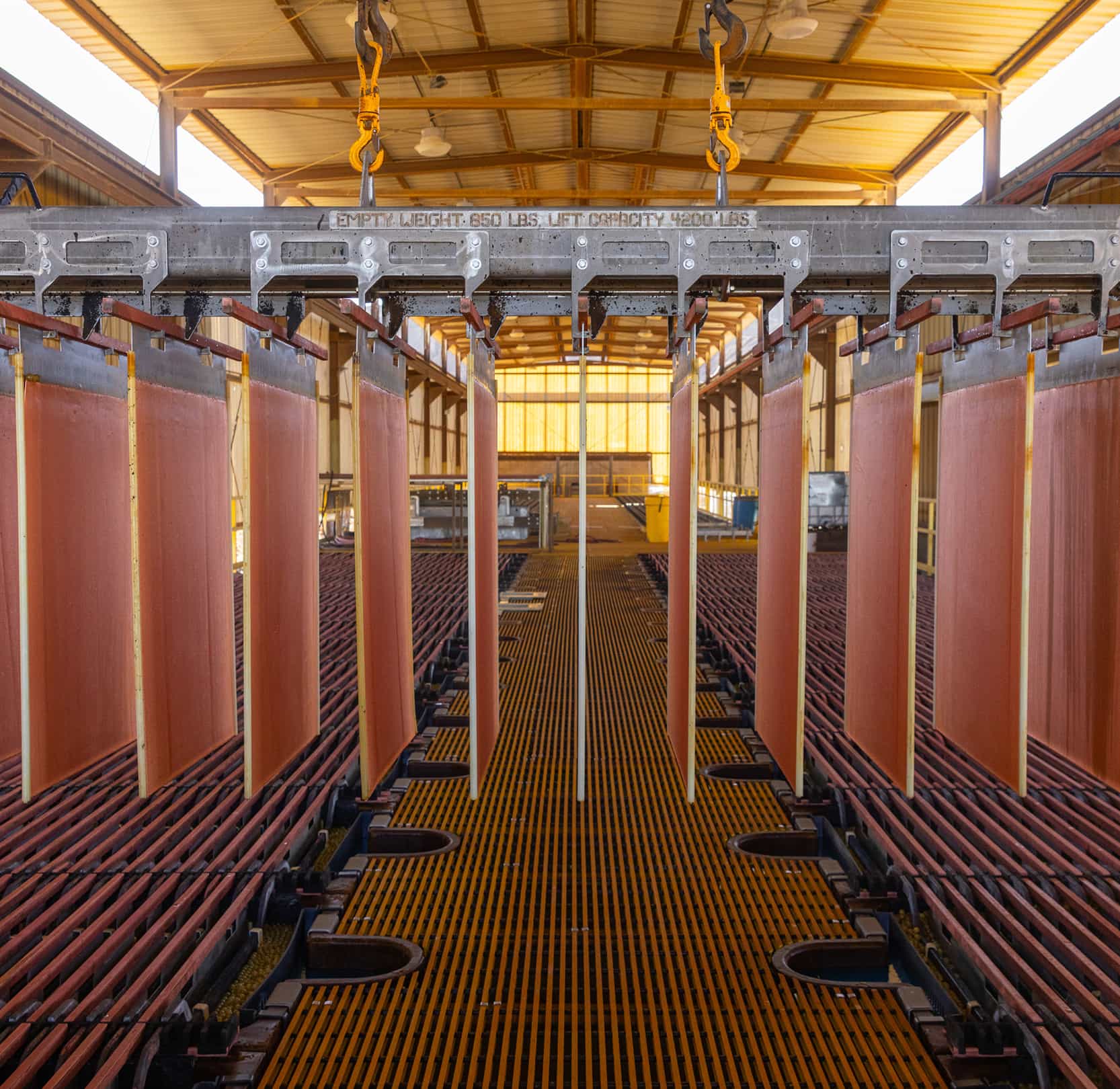
Nuton relies on naturally occurring microorganisms to extract copper from primary sulphide ores, which are traditionally difficult to process. These microbes, grown at large scale in Nuton’s proprietary bioreactors, accelerate the oxidation of minerals in the crushed ore heap, generating heat and enabling copper to dissolve into a leach solution, which is then processed into 99.99% pure copper cathode.
Significantly, processing copper ore with Nuton eliminates the need for concentration, smelting and refining, shortening supply chains and delivering copper cathode at the mine gate. It achieves recovery rates of up to 85% from primary sulphides, the most abundant copper bearing ores in the world.
Nuton can also extend mine life and maximize resource use by extracting value from ores that would otherwise be classified as waste, increasing yield and revenue at both new and existing mines. Its environmental performance is expected to exceed conventional copper processing technologies, with up to 80% less water usage and up to 60% lower carbon emissions than the traditional concentrator route.
At Johnson Camp, Nuton aims to produce copper with the lowest carbon footprint in the U.S. Through the purchase of 134,000 Green-e Energy certified renewable energy certificates, Nuton ensures 100% of the site’s electricity is matched by renewable sources. The copper produced is anticipated to have a mine-to-metal carbon footprint of 0.82-kilogram CO₂-e per kilogram copper, the lowest in the U.S. and substantially lower than the projected 2026 global average of 3.4 kilograms CO₂-e per kilogram among operating copper mines. Additionally, water intensity is anticipated to be 71 litres per kilogram copper, compared to the global average industry estimate of ~130 litres per kilogram of copper production.
Gunnison Copper Chief Executive Officer and President Stephen Twyerould said, “The first production of Nuton copper at Johnson Camp is the culmination of exceptional teamwork between Gunnison Copper and Rio Tinto’s Nuton team. Achieving this level of performance in such a short time frame shows what is possible when innovation, operational excellence, and a shared vision come together. With Nuton copper now entering the U.S. supply chain, this milestone underscores the critical role we can play in strengthening domestic access to cleaner, low-carbon copper.”
While this milestone confirms Nuton’s engineering and operational viability, the next phase will focus on validating long-term technical performance. This includes multi-year testing, independent third-party verification, and internal review by Rio Tinto to ensure consistent recovery rates and environmental performance.

Contacts
Please direct all enquiries to media.enquiries@riotinto.com
| Media Relations, United Kingdom Matthew Klar M +44 7796 630 637 David Outhwaite M +44 7787 597 493 | Media Relations, Australia Matt Chambers M +61 433 525 739 Alyesha Anderson M +61 434 868 118 Rachel Pupazzoni M +61 438 875 469 Bruce Tobin M +61 419 103 454 | Media Relations, Canada Simon Letendre M +1 514 796 4973 Malika Cherry M +1 418 592 7293 Vanessa Damha M +1 514 715 2152 |
| Investor Relations, United Kingdom Rachel Arellano M: +44 7584 609 644 David Ovington M +44 7920 010 978 Laura Brooks M +44 7826 942 797 Weiwei Hu M +44 7825 907 230 | Investor Relations, Australia Tom Gallop M +61 439 353 948 Eddie Gan-Och M +976 95 091 237 | Media Relations, US & Latin America Jesse Riseborough M +1 202 394 9480 |
| Rio Tinto plc 6 St James’s Square London SW1Y 4AD United Kingdom T +44 20 7781 2000 Registered in England No. 719885 | Rio Tinto Limited Level 43, 120 Collins Street Melbourne 3000 Australia T +61 3 9283 3333 Registered in Australia ABN 96 004 458 404 |
Steve McCabe has a packed schedule. As a Senior Deployment Advisor at Nuton, a Rio Tinto venture, his job is to help bring the company’s groundbreaking heap leaching technology to life.
“It’s a lot of coordination,” Steve said, putting it simply.
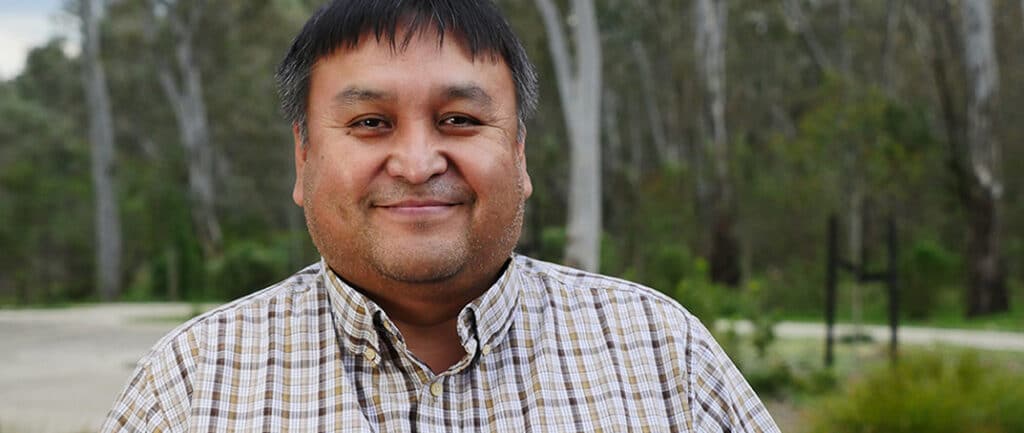
From working with vendors and leading teams to building mobile labs, and analyzing materials, there’s no shortage of moving pieces ahead of Nuton’s first large-scale deployment at Johnson Camp Mine in Arizona.
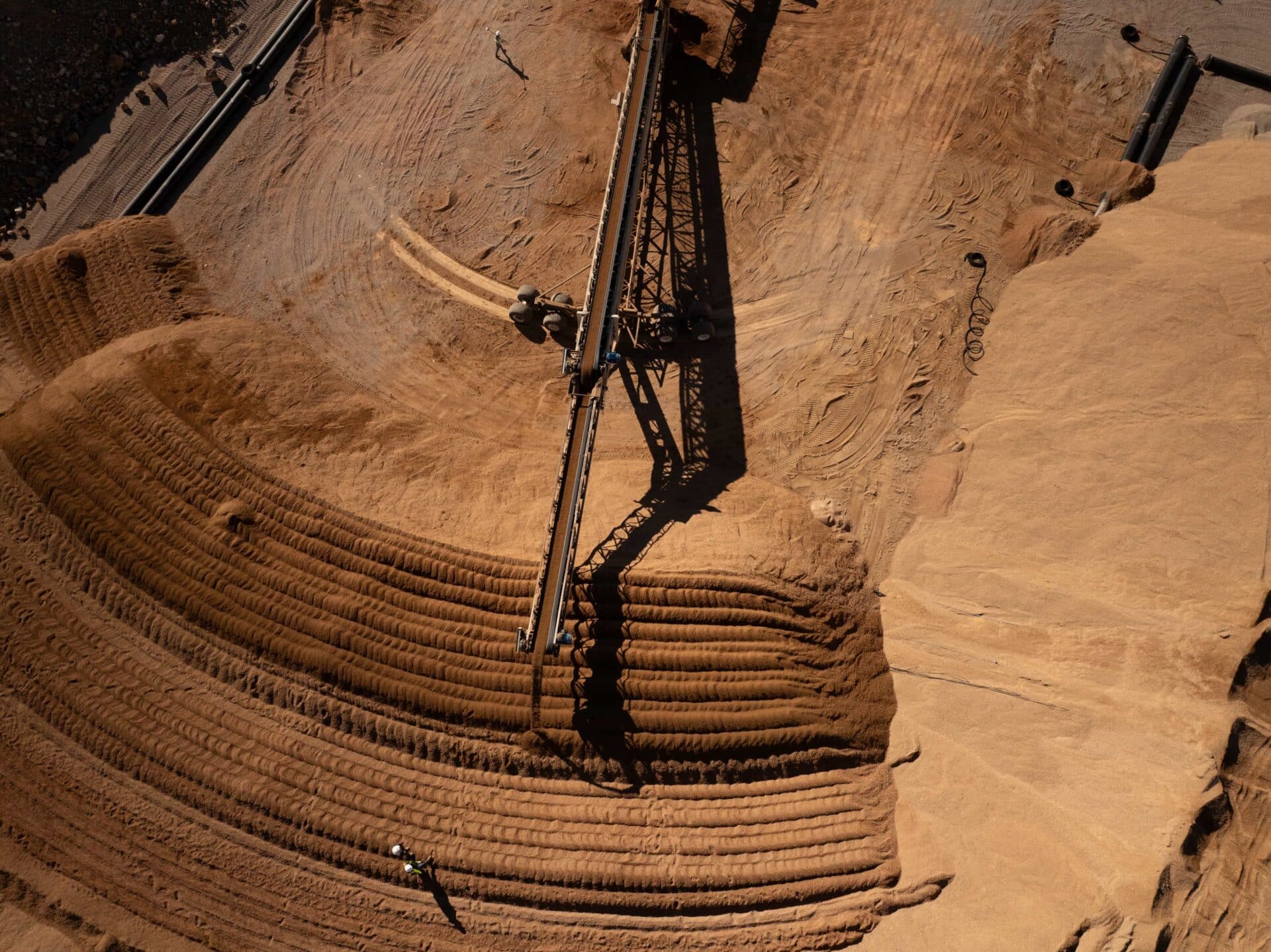
Lately, Steve’s main focus has been on agglomeration, a critical step in Nuton’s process. In this phase, fine ore particles are bound together using a blend of additives and solutions, improving permeability and ensuring uniform leaching. This step is essential before the material is placed on heap leach pads, where the bio heap leaching process efficiently extracts copper.
Steve’s passion for his work is evident in his deep knowledge and expertise when discussing his daily responsibilities. He is acutely aware of his journey — from an engineer to a metallurgist to a deployment advisor —and he remains grateful for every step. As the first person in his family to attend college, he understands the significance of higher education.
“There are a lot of challenges that tribal students face,” said Steve, a member of the San Carlos Apache Tribe. For many students in his community, college may not seem likely—or even possible. The reasons are multiple and complex. Some students may not know how to take the next step after high school, while others may feel overwhelmed and unsure of what to do if college is in their plans.
“Many Tribal students underestimate themselves,” Steve explains. “They don’t see their potential. But with the right guidance, they can break through those mental barriers and start seeing what’s out there for them”.
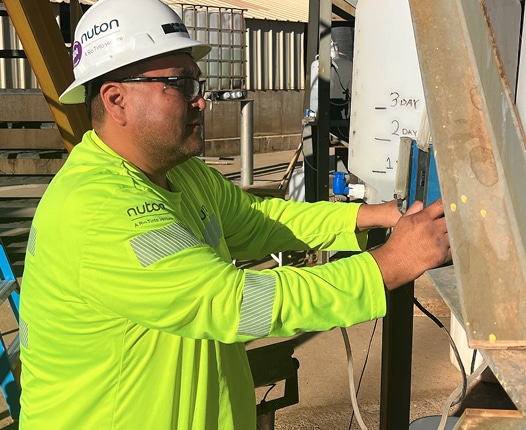
But having a role model—someone who’s been there—can change everything. Before joining Nuton, Steve dedicated years to his Tribe’s education department, assisting students navigate the college process. He continues to mentor high schoolers today, guiding them toward opportunities they might not have realized were within reach.
Steve understands their situation well. When Steve first stepped onto Arizona State University’s campus, he intended to become a nurse. However, after exploring different degree programs, he discovered a passion for chemical engineering. That decision changed his life.
Steve’s education has had a ripple effect—not just for him, but for his entire family. Two of his three children attended Stanford University, and the other recently enrolled at Yale. He doesn’t share this to boast, but to illustrate what’s possible.
“Many Tribal students underestimate themselves,” he explains. “They don’t see their potential. But with the right guidance, they can break through those mental barriers and start seeing what’s out there for them”.
Just like Nuton is working to change the future of copper mining, Steve is working to change the future for students in his community.